
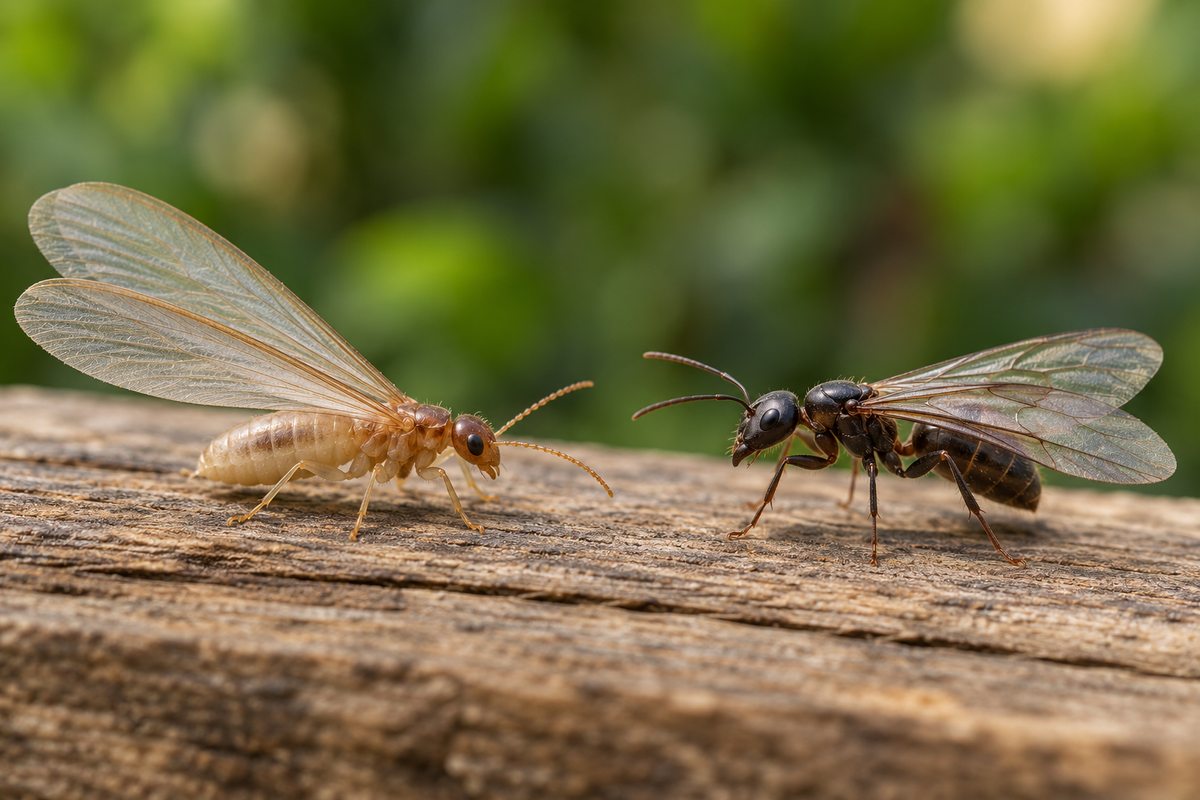
A cluster of winged insects at a window can create immediate concern, but winged ants and termite swarmers are different insects with different implications. The most useful response is to preserve a specimen, photograph the activity and compare several physical features rather than relying on color or location alone.
Begin with identification, not assumptions
Good pest decisions begin with evidence. For termite swarmers and flying ants, that means recording the exact location, time, frequency and conditions surrounding the observation. A close photograph, intact specimen or simple written log can be more useful than a long description from memory. It also helps separate a current problem from old evidence or a harmless look-alike.
Integrated Pest Management, or IPM, is the practical framework used throughout this guide. The U.S. Environmental Protection Agency describes IPM as a process that combines identification, monitoring, prevention and appropriate control. It does not mean that pesticides are never used. It means that any control method should answer a defined problem and be combined with sanitation, exclusion, moisture correction or monitoring when those measures are relevant.
Research-backed points to understand
- Termite swarmers generally have a broad waist, straight-looking antennae and two pairs of wings that are similar in length. Winged ants have a pinched waist, elbowed antennae and front wings that are longer than the rear pair.
- Swarming is a reproductive event. It does not show the full size, exact location or structural effect of a colony, so a few insects cannot establish the extent of a condition.
- Maryland guidance treats wood-destroying-insect inspection as a documented visual examination of readily accessible areas. Property-transfer inspections use the state MD-1 form and have defined limitations.
- Moisture, wood-to-soil contact and inaccessible structural areas can affect risk and inspection access, but none of those conditions alone proves an active termite infestation.
These points are useful for planning, but they are not a remote diagnosis. Pest appearance can change with life stage, specimens can be damaged, and building conditions can hide the source. When identification affects treatment choice, property damage, health precautions or a real-estate transaction, an appropriate inspection is the safer next step.
Evidence worth recording
- equal-length shed wings in small piles
- mud-like shelter tubes on masonry or framing
- damaged wood with concealed galleries
- repeated swarmers emerging from an interior area
- moisture or wood-to-soil contact near the structure
Record evidence without creating additional exposure. Do not disturb a nest, open a suspect wall, handle wildlife, or approach a stinging-insect flight path for a better photograph. Keep children and animals away from contaminated material. If a specimen can be collected safely, use a sealed container or clear tape and label where and when it was found.
A practical prevention and preparation checklist
- save several intact insects in a small sealed container
- take close photographs from above and the side
- avoid breaking open finished walls or spraying the evidence
- note the emergence point, date, weather and nearby moisture conditions
Prevention is most effective when it is specific. “Keep the property clean” is not a useful plan by itself. A stronger plan identifies the leak, gap, food source, water container, storage practice or habitat edge that matters, assigns the correction, and then checks whether activity changes. This is particularly important in rentals, attached housing and commercial properties where several people may control different parts of the building.
Common mistakes that can obscure the problem
- identifying insects only by dark or pale color
- calling every ant with wings a termite
- assuming a clear visual check guarantees the structure is free of insects
- covering damaged material before it can be evaluated
Uncoordinated do-it-yourself work may scatter evidence or conflict with a later treatment. Keep a list of products already used, including the product name, application location and date. The pesticide label is the controlling instruction for where a product may be used, what it targets and what precautions apply. More product is not automatically more effective, and combining products is not a substitute for identification.
How a professional assessment should be scoped
When calling about termite swarmers and flying ants, describe the evidence before asking for a treatment. Give the Frederick service ZIP, property type, affected rooms or exterior areas, how long the signs have been present and what has already been tried. Mention pets, allergies, occupants with special needs, tenant coordination, food-handling areas or access limitations that may affect the work.
A proposal should distinguish inspection, treatment, monitoring, exclusion, cleanup and repair. Those are different tasks and may require different access, materials or qualifications. Ask which areas are included, what preparation is required, what conditions could change the scope, and how follow-up will be evaluated. Avoid relying on a permanent-eradication promise because future pest pressure depends partly on building conditions and activity outside the treated area.
Questions to ask before authorizing work
- Is this a general termite assessment or a Maryland property-transfer WDI inspection?
- Which areas were inaccessible?
- What visible evidence supports the identification?
- Are treatment, repair and follow-up separate parts of the proposal?
Maryland regulates commercial pesticide work, and some specialist services have additional requirements. Request the licensing, certification or permit information relevant to the proposed work rather than assuming that one credential covers every service. For wildlife, WDI reports or work involving unusual access, confirm capability before the appointment.
What Frederick property owners can do next
Properties in ZIP codes 21701, 21702, 21703, 21704 and 21705 include detached homes, row homes, apartments, historic structures, offices and mixed-use buildings. Construction details and property use can matter more than a neighborhood label. Two nearby buildings may have different moisture conditions, utility penetrations, shared walls or landscape edges, so the same visible pest does not automatically call for an identical plan.
Start with a safe observation, preserve useful evidence and correct obvious non-chemical conditions when doing so will not disturb the pest. Then request an assessment when the identity is uncertain, activity persists, structural material may be involved, occupants face a health or sting risk, or regulated documentation is needed. The goal is a proportionate response based on what is actually present.
Need help with this concern?
Review termite control or call with the property ZIP and the evidence you have observed.
Sources and further guidance
This article summarizes public guidance available on October 5, 2026. Follow current agency instructions and product labels.