
Outdoor activity near regularly used spaces
Discuss water sources, vegetation and the parts of the yard included.
Mosquito & Tick ControlFor pest control in Clover Hill, explain whether the problem is inside the house, around an outbuilding or in a part of the yard you use regularly. A clear location helps separate household pest work from an outdoor assessment at your 21702 property.
Physical service address: 21702. Availability and scope confirmed when booking.
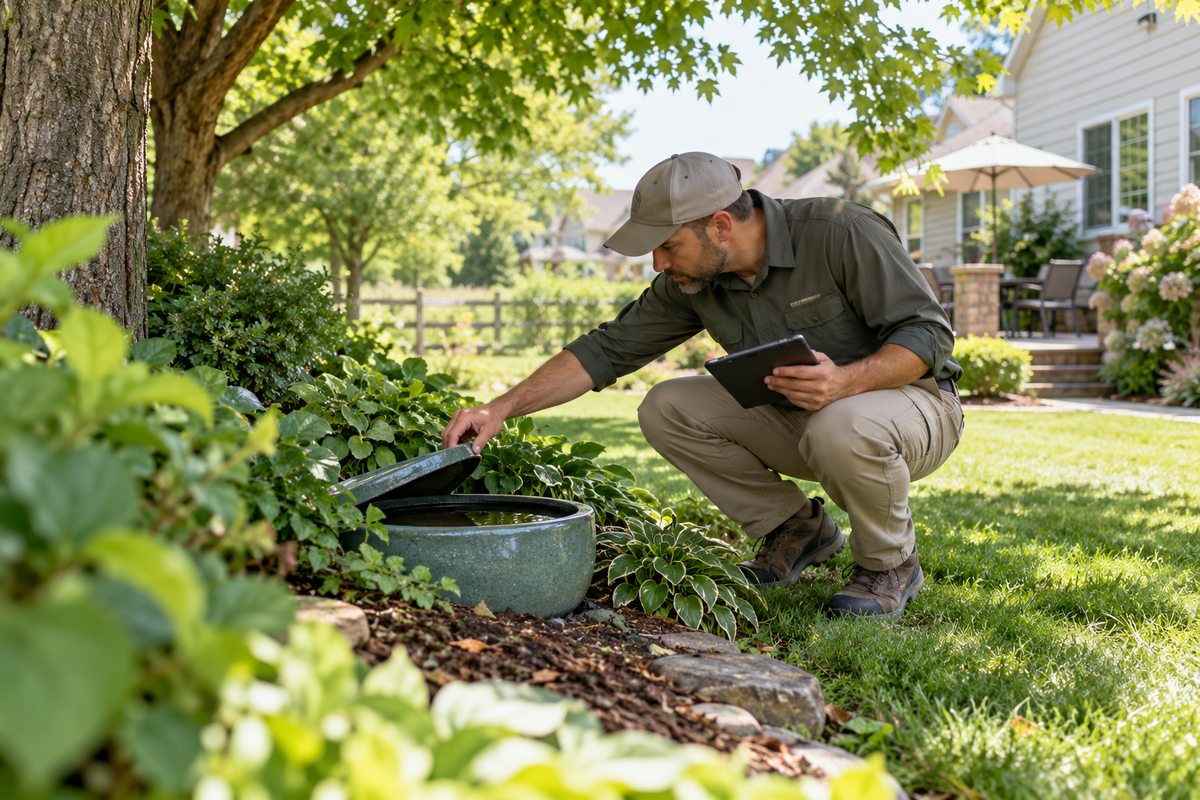
Clover Hill’s association describes a single-family community with a shared park and mature trees. These features provide context for discussing property boundaries; they do not establish the source of a pest problem or justify treating community land.
Point out the private spaces involved: a foundation edge, shed, deck, patio or play area. If the concern is on association property, report it to the responsible contact. A household quote should not quietly extend into a park, path or neighboring yard.
Discuss water sources, vegetation and the parts of the yard included.
Mosquito & Tick ControlSeparate current activity from the repair work that may reduce entry.
Rodent Control & ExclusionDescribe its location from a safe distance; do not disturb it to get a better view.
Bee, Wasp & Hornet ControlAfter rain, check items you can reach safely for collected water, including buckets, plant saucers and folded covers. CDC recommends a weekly routine to empty and scrub, turn over, cover or discard suitable water-holding items. A large yard is not the only place these sources occur.
Tell us about ponds, gardens, pet routes and outdoor seating before discussing any application. Do not put a pesticide into water unless its label permits that use. An outdoor plan should define its target and limits; pests can still move into an open yard.
Scratching indoors, gnawed packaging or droppings call for a different assessment from insects encountered outside. Describe the evidence and its position relative to the house. Do not assume an animal seen in the yard is the one making a noise in the attic.
Where an inspection suggests an entry point, ask whether exclusion, cleanup and repairs are part of the quotation. Physical exterior changes may also need property approval. Establish the likely pest and any active use of an opening before arranging to seal it.
For a Clover Hill outdoor pest enquiry, sketch the spaces actually used: seating, play equipment, the route to a shed and the dog’s usual path. Mark the property boundary and any brushy edge. The goal is to discuss exposure and habitat, not assume the entire lawn has the same conditions.
CDC guidance for reducing blacklegged tick habitat includes removing leaf litter, managing tall grass and separating recreational space from wooded edges. It describes a three-foot wood-chip or gravel border as one option to restrict movement; this is not a tick-proof barrier or a substitute for personal precautions.
Discuss which changes are practical for your plot before requesting an application. A play area beside an unmanaged edge presents a different planning question from an open patio. Changes on shared land need the responsible owner’s agreement.
For mosquitoes, your notes should identify standing-water containers and where activity interrupts outdoor use. For ticks, the useful context includes contact with brushy or wooded margins and where people or pets have been. One outdoor service label should not hide these different inspection questions.
Ask an estimator to separate habitat recommendations from any proposed application. Which conditions can you change, which are outside the property and which will be reviewed later? This makes the proposal easier to understand even when the final recommendation involves more than one method.
Keep yard treatment separate from medical or veterinary decisions. CDC advises that spraying alone should not be relied upon to prevent tickborne infection. Continue appropriate tick checks and obtain health advice for a bite or symptoms; a pest-service visit cannot assess an individual’s health.
Choose a practical observation routine around normal yard use rather than deliberately entering brush to test the treatment. Record the area, approximate time and what was observed. Also note changed conditions such as moved containers, cleared vegetation or a different walking route.
At follow-up, ask whether the remaining concern reflects an unresolved habitat issue, a boundary limitation or a need to reassess the target pest. A useful review explains what the service can influence on your property and what remains outside its scope.
No. Private-property enquiries do not authorize work on association grounds. Shared-land concerns should be coordinated with the responsible manager.
No outdoor treatment can prevent every mosquito from entering. Discuss source reduction, the proposed treatment area and follow-up expectations.
Do not close a potentially active animal entrance before identification and assessment. Exclusion needs to account for what is using the opening.
No. It is a landscaping measure that may help restrict tick movement from wooded edges. It does not eliminate the need for personal precautions or establish that every part of a property is free of ticks.
No. Ask which pests, areas and methods are included. Mosquito source reduction and tick habitat management involve different observations, so the scope should be explicit rather than inferred from the phrase outdoor pest control.
Call with the physical address, observed signs and any access restrictions. Ask about current availability and the inspection or service that fits the concern.
Call (301) 264-9552See the 21702 coverage directory for address checks and other covered communities.
Match the inspection to a detached house, townhome or condominium.
View the local guide for WhittierRecord evidence by floor and distinguish garage access from living-space activity.
View the local guide for KellertonCommunity sources establish location or property context, not pest prevalence, customer relationships or an endorsement.